
How to Teach Christmas to a Child Who Struggles with Abstract Concepts
For many years, my son didn't understand Christmas. At least, not in the way most children do.
He didn't care for Santa Claus "coming to town."
He didn't care about setting out cookies and milk or writing a letter filled with wishes.
He didn’t even care about the wrapped gifts sitting under the tree.
And since this wasn’t for lack of trying on my part, I eventually had to admit to myself that Christmas simply didn’t land for him in the way it lands for other kids.

A white girl wearing holiday themed eye glasses symbolic of seeing Christmas through the eyes of the child
I spent a decade trying to make the holidays special, memorable, tradition-filled. But no matter what I did, Christmas still felt like any other day for my son.
For a long time, this weighed heavily on me. I asked myself, “Why am I doing all this?” and “Who is this actually for?” Those questions finally led me to a more helpful one: “How can I make this holiday developmentally appropriate for my child?”
So, yes. I went there.
I slipped into my teacher/consultant mindset and looked at Christmas the same way I look at any theme we explore in our homeschool: adapt it, break it down, and make it accessible.
I’ve tried plenty of things over the years to make the holidays feel meaningful, and we’ve built routines that help when we’re out with others.
But treating Christmas as a themed learning unit is a whole different challenge. Holidays come with layers of history, cultural expectations, and traditions that we barely question as adults because we grew up with them.
But some children may not have the same automatic understanding, and that’s why reframing matters.
Below are some ways to teach about Christmas (or any holiday) in ways that support disabled or neurodivergent learners. This isn’t about watering anything down. It’s about making the holidays feel doable and less confusing for a child who doesn’t yet fully grasp them.
We benefit from looking at Christmas through the eyes of the child, not only through the lens of tradition.
Be realistic
Start by asking:
- What parts of this holiday theme can my child/student genuinely understand?
- Which parts are still too abstract?
- What can I adapt so the experience feels meaningful instead of overwhelming?
Notice the abstract
Holiday language is full of words and ideas that require abstract thinking. I made a small list so I’d be mindful of what my son may not automatically understand.
Examples of abstract holiday concepts:
• Giving and receiving
• Midnight
• “Merry Christmas”
• Magic and miracle
• The Nativity story (Jesus, Mary, Joseph)
• Santa Claus and his “arrival”
Even familiar characters (Santa, reindeer, angels, elves, baby Jesus) represent deeper cultural or symbolic meanings. They can be taught, but they won’t always make sense right away.

The story of the coming of Jesus is an example of an abstract concept. Using concrete characters such as these supports comprehension.
12 Days of Discovery
To celebrate the season and help you finish the year with curiosity, connection, and a bit of fun, here's a FREE tool designed to spark creativity and joy in your family’s learning.
Make the abstract concrete
Developmental psychologist Jean Piaget suggested that abstract reasoning develops between the ages of 11 and 16. Some children with cognitive disabilities may reach this stage later in life. Exposure still matters.
Hands-on activities are the bridge between “I don’t get this” and “This makes sense to me.”
Below are ways to turn abstract holiday ideas into concrete experiences.
Giving and receiving
If you’re teaching the idea of giving, practice it through tiny, simple exchanges.
Wrap a single toy block. Narrate each step:
“Let’s surprise [Dad]. We’ll give him this gift. He will be so happy!”
Have your child hand it to him (hand-over-hand if needed). Let [Dad] react with joy and thanks.
Do this a few times over several weeks with different items and different people.
Connect the vocabulary: give, gift, surprise, share.
You can expand the idea:
• Give a hug (with child's consent)
• Give a high-five
• Give a crayon
• Give a snack
The abstract concept of Santa Claus
Santa is a character wrapped in layers of fantasy. For many kids, the story is too abstract to follow, but you can still make it accessible.
Hands-on experiences help build familiarity.
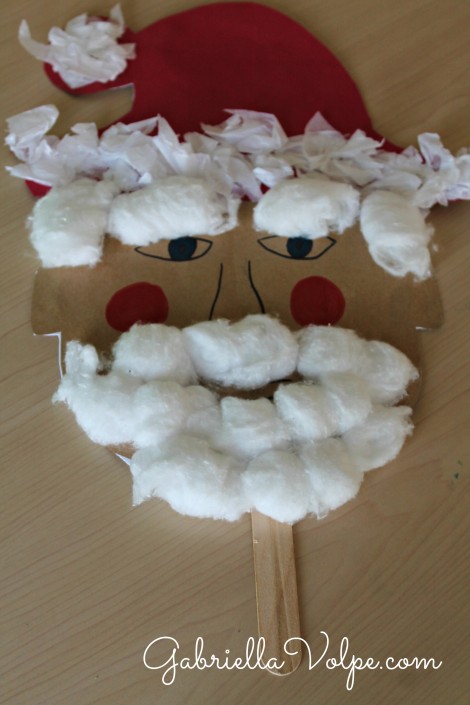
We once made a Santa mask. As my son helped glue the cotton beard, touch the red felt, and paint his rosy cheeks, we talked about who Santa is, what he does, and what he looks like. Now, whenever I even say “Santa Claus,” he looks straight at that craft.
Ways to make Santa concrete:
• Act out a simple Santa story
• Use puppets or felt pieces
• Make crafts (Santa, reindeer, gifts)
• Bake cookies “for Santa”
• Explore holiday scents (cinnamon, nutmeg, ginger)
• Use sensory bins with ornaments and figurines
• Sing carols that mention Santa
• Connect concepts the child already knows (e.g., giving)
A child might not grasp that Santa travels the world in one night, but they can still build understanding through repeated, concrete experiences.
My son still doesn’t quite understand Christmas the way most children do. But he understands it more than he did years ago because I started teaching it in a way that fits him.
If holiday concepts feel difficult to teach, you’re not alone. Try breaking them down, making them concrete, and letting go of what “should” be.
Your child’s way of experiencing Christmas is just as valid.
Related articles
Get more resources like this one
Sign-up to my newsletter and I’ll send you email updates regarding education, accessibility, and disability justice.

By signing up for email alerts, you agree to receive updates and promotions from me. You can unsubscribe at any time.
0 Comments