
Creating a Calmer, More Accessible Christmas for Your Neurodivergent or Disabled Child
Many families raising neurodivergent or disabled children move through the holidays differently from what others might expect.
While people around us look forward to big gatherings and festive plans, we often have to think several steps ahead. The extra preparation, the sensory load, the unpredictability, and the emotional labor can drain a family before the celebrations even begin.

A Christmas tree as a means to making Christmas memorable for a neurodivergent or disabled child.
The typical hustle of the season can be overwhelming for many neurodivergent and disabled children. Holiday sights, sounds, smells, and crowds can feel intense. Changes in routine, sleep patterns, or environments can make the days feel harder to navigate.
Some children may need mobility equipment or medical supplies transported everywhere they go. Others may need meals adapted to their needs, familiar foods, or a plan to avoid sensory overload. None of this is “small.” These layers add up, and the weight often sits on the parents’ shoulders.
For years, I watched people around me dive into the joy of Christmas while I braced myself for the stress of it. I wanted to feel festive. I wanted to be “that mom” who makes memories easily and effortlessly.
Instead, I felt anxious all December, only to reach the big days tense and exhausted. My son felt the stress. I felt guilty. And I wondered, “Who am I doing this for?”
Eventually, I realized I needed an approach that worked for who we are as a family, and who my son is as a disabled person. I couldn’t disappear from the holidays, but I could redefine them.
We deserve a holiday season that fits our family, honours our child, and makes room for our reality.
So now, instead of saving all the expectations for December 24th and 25th, we stretch Christmas across the whole month. It gives us space and breathing room. And it removes the pressure to “perform” joy on command.
If you’re feeling the same heaviness as the season approaches, here are some gentle ways to make the lead-up to Christmas feel meaningful, accessible, and calmer for your family.
1. Bring in the magic slowly.
At the start of December, bring out books, decorations, lights, music, or whatever feels comforting to your child. A slow build helps lift the mood without the overwhelm of a sudden sensory switch.

A dad and daughter reading a pop-up holiday book as a means to make Christmas memorable for a neurodivergent or disabled child.

12 Days of Discovery
To celebrate the season and help you finish the year with curiosity, connection, and a bit of fun, here’s a FREE tool designed to spark creativity and joy in your family’s learning.
2. Read holiday stories together.
Share a Christmas story once a day. Morning, bedtime, or after dinner. Choose what fits your rhythm. Story time offers connection without pressure.
3. Introduce holiday vocabulary.
Help your child become familiar with the words they’ll hear during celebrations. You might focus on items (tree, lights, ornaments), actions (open, sing, share), or social/emotional words (excited, cozy, quiet, waiting). This is especially helpful for AAC users and children who benefit from previewing what’s to come.
4. Use an Advent calendar as a visual countdown.
Whether it’s store-bought or homemade, an Advent calendar creates a predictable daily touchpoint. You can add a short message, intention, quote, or prayer that fits your family.

A mom and son admiring an light-up ornament as a means to make Christmas memorable for a neurodivergent or disabled child.
5. Create a calming ritual with candles.
Lighting a candle at dinner can become a grounding moment. Soft light can create a sense of peace, which is something many kids (and adults) appreciate on busy days.
6. Sing carols in a way your child can participate.
I keep a simple book of carols and let my son choose a page based on the picture. Choice-making counts as participation! You can sing, hum, play recordings, use instruments, or simply enjoy the moment together.
7. Go for evening drives to look at lights.
Driving around to see neighbourhood displays is a low-pressure way to enjoy the season. It’s warm, predictable, and accessible for many families.
8. Build moments of gratitude or intention.
Whether you pray, reflect, set intentions, or simply pause, find small moments to acknowledge what’s working and hope for more calm in the days ahead.
Wishing you a peaceful, meaningful holiday season—one that fits your family, honours your child, and makes room for your reality.
Related articles
Get more anecdotes and strategies like this one
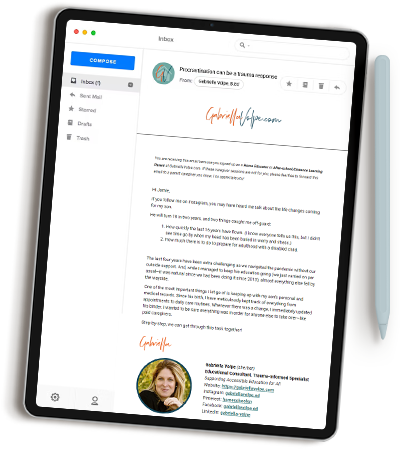
Sign-up to my newsletter for homeschoolers
By signing up for email alerts, you agree to receive updates and promotions to support you in home education. You can unsubscribe at any time.
0 Comments